
Persistent challenges amid a push for affordability and autonomy
Electromobility faced setbacks in 2024 as consumers grappled with rising inflation, which reduced disposable income, high interest rates that made financing expensive EVs even costlier, economic uncertainty that deterred large purchases such as cars, and persistent range anxiety.
According to Cox Automotive, EV sales in the US grew [1] by just 7.3% year-on-year in 2024, continuing their slowdown. Meanwhile, battery electric vehicles in the European Union declined [2] by 5.9% year-on-year, as reported by the European Automobile Manufacturers' Association. In contrast, sales in China remained strong, rising [3] by 19%, according to Rho Motion.
Negativity could persist in the coming months as US President Trump’s policies pose risks to the global economy and the automotive industry. Levies against Canada and Mexico - two major auto manufacturing hubs – as well as duties on steel and aluminium, alongside reciprocal tariffs expected in the second quarter, present significant challenges for carmakers. At the same time, his pledge [4] to revoke the electric vehicle mandate and undo his predecessor’s green energy policies could further hinder the already slowing EV adoption.
Despite ongoing challenges and a renewed focus on hybrids, automakers are not backing down, and there are reasons for optimism in 2025. More affordable vehicles are key to EV proliferation, with legacy manufacturers and pure-play electric car makers introducing lower-cost models. Proven hitmakers such as Renault and Stellantis-owned Fiat are leading the charge in affordable BEVs with the R5 and Panda models. While details remain unclear, EV leader Tesla has hinted at unveiling more affordable models as early as the second quarter. In China, where prices are generally lower, premium startups like XPeng are introducing budget-friendly spin-off brands to reach a wider audience.
Excitement around EVs could be reignited by breakthroughs in artificial intelligence and advancements in autonomous driving. Tesla CEO Elon Musk is a vocal advocate of this shift, despite some scepticism surrounding his ambitious claims. Chinese carmakers such as BYD are also making strides, incorporating smart driving features into many of their models.
Against this uncertain backdrop, the second quarter is poised to be highly interesting. The rivalry between Tesla and BYD will stay front and center, Volkswagen and Rivian turnaround efforts along with progress on affordability will be closely monitored, while the successful EV entry by Xiaomi will continue to draw attention.
Tesla: Caught between AI push & automotive struggles
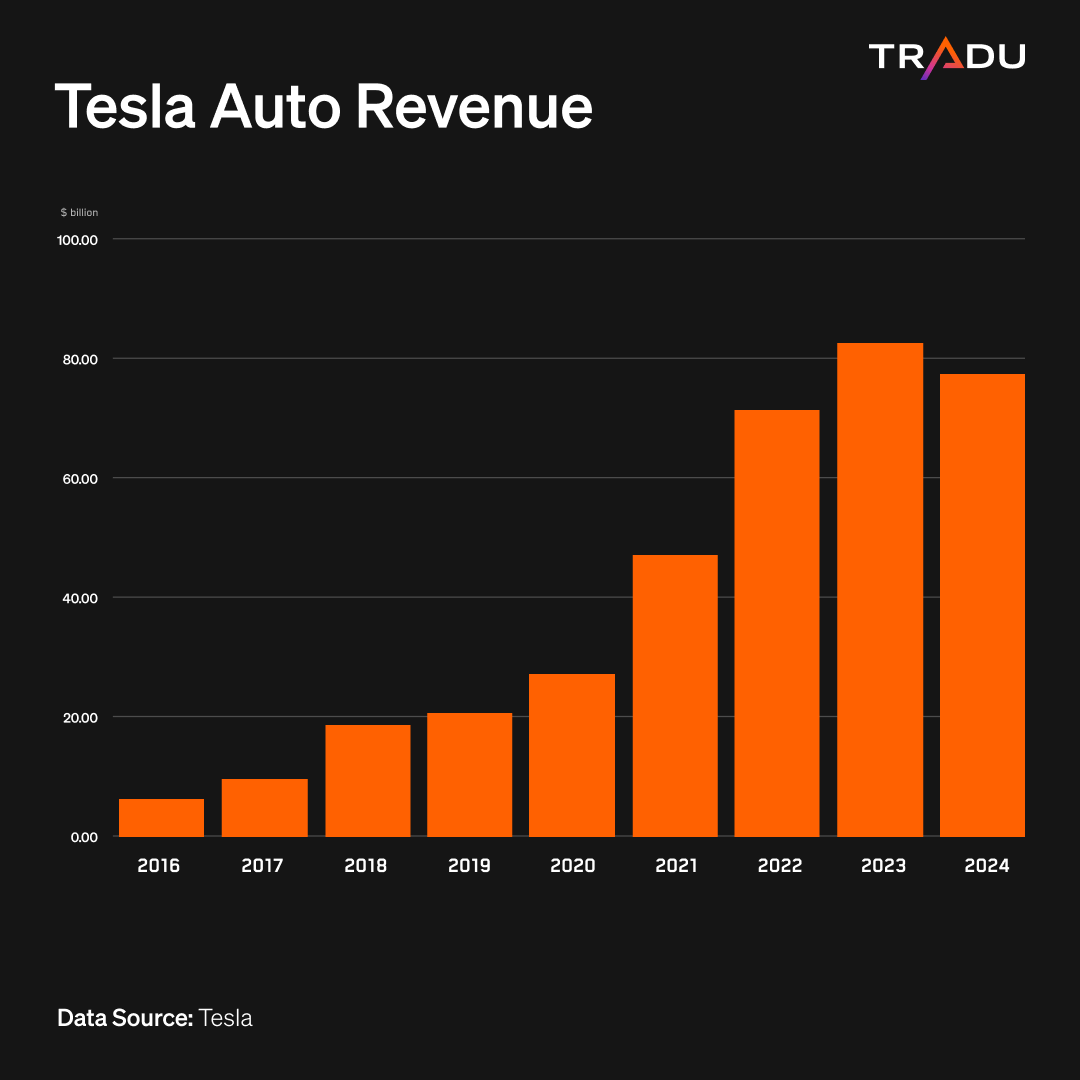
Tesla emerges from a challenging 2024, grappling with the adverse macroeconomic environment and the waning appeal of electric vehicles. These factors have exacerbated existing difficulties stemming from an ageing vehicle lineup and intensifying competition. Deliveries fell by 1% year-on-year—the company's first-ever contraction—while automotive revenues dropped by 6%. Net income plunged by 53%, and operating margins narrowed to 7.2%, the lowest in four years, as aggressive promotions aimed at stimulating demand weighed on profitability.
The start of 2025 has been equally difficult. In January, Tesla’s sales in Europe plummeted [5] by 45.2%, according to ACEA, while concerns over Elon Musk’s priorities and popularity are growing. Speaking on Fox Business, Musk admitted [6] to running his businesses with “great difficulty” as he leads the newly formed Department of Government Efficiency (DOGE). Public perception of him appears to be deteriorating as an NBC poll [7] found that 51% of US respondents viewed him negatively, while a YouGov poll [8] revealed that 71% of respondents in Germany and the UK held an unfavourable opinion.
However, his affiliation with President Trump and involvement in DOGE could facilitate Tesla’s high-stakes pivot towards autonomous driving. The President’s deregulation agenda may create a more lenient and streamlined regulatory framework, potentially enabling Musk to accelerate his ambitious timelines. During the latest earnings call [9], the CEO reiterated plans to launch unsupervised Full Self-Driving (FSD) in Austin within the second quarter—though initially, this will be available only as a paid service for Tesla’s own fleet. Simultaneously, plans for more affordable vehicles could reignite demand and support the struggling core automotive business, with executives forecasting a return to growth this year.
Despite these efforts, Tesla will continue to face fierce competition. Rival manufacturers are advancing more rapidly on affordable EVs, and while Tesla has finally introduced supervised FSD in China, domestic players like BYD are moving even faster.
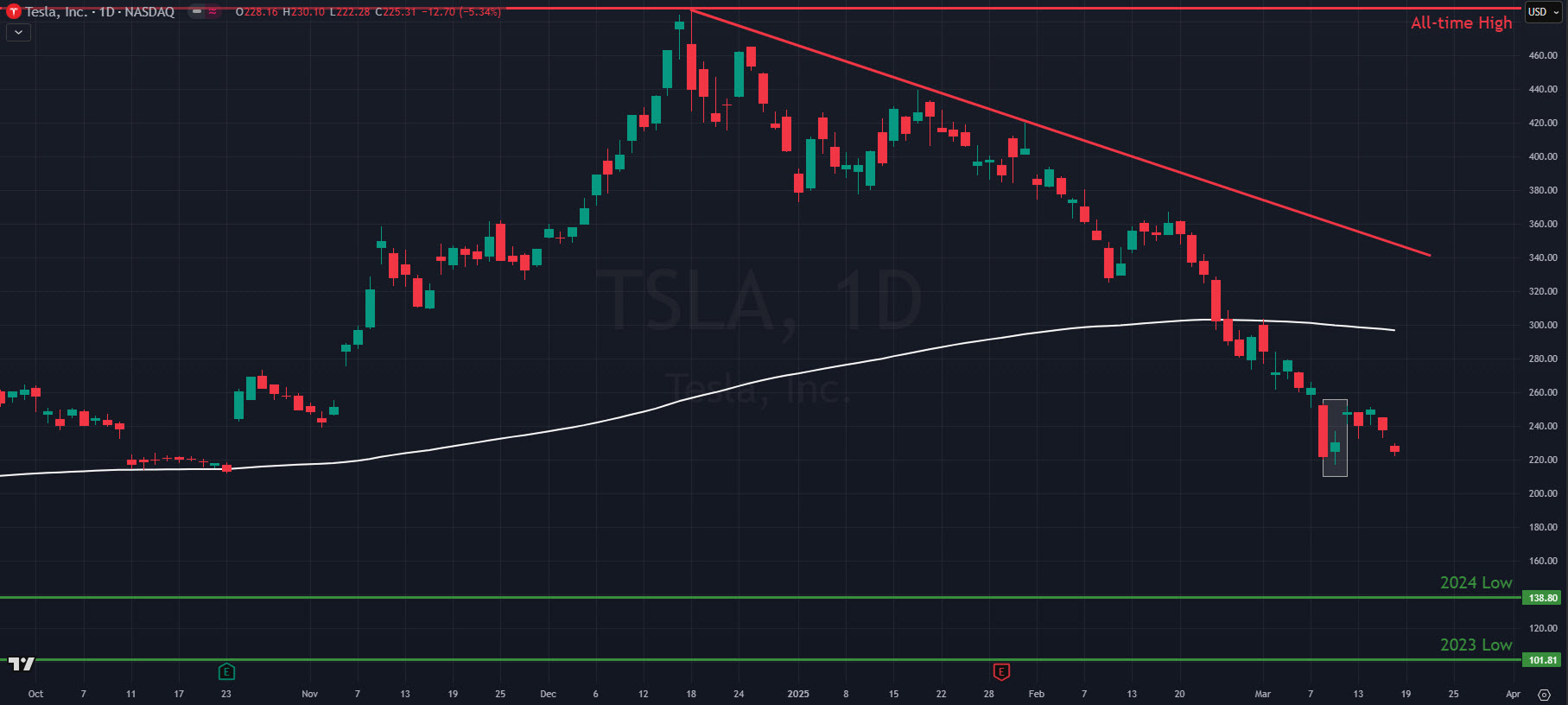
In a dramatic reversal from last year’s advance and December’s record high, TSLA plunges in 2025 as concerns around the automotive business mount. However, the company’s AI ambitions hold significant potential to drive a turnaround - though they need to translate into tangible progress to restore investor confidence.
Source: www.tradingview.com
BYD: Surging sales and technological advancements
The Chinese automaker has taken the industry by storm, dominating global electrified vehicle sales for the past three years, with nearly 4.3 million units sold in 2024. It is also making significant strides in the pure BEV segment, with Tesla narrowly retaining its top position last year, aided by a surge in fourth-quarter sales.
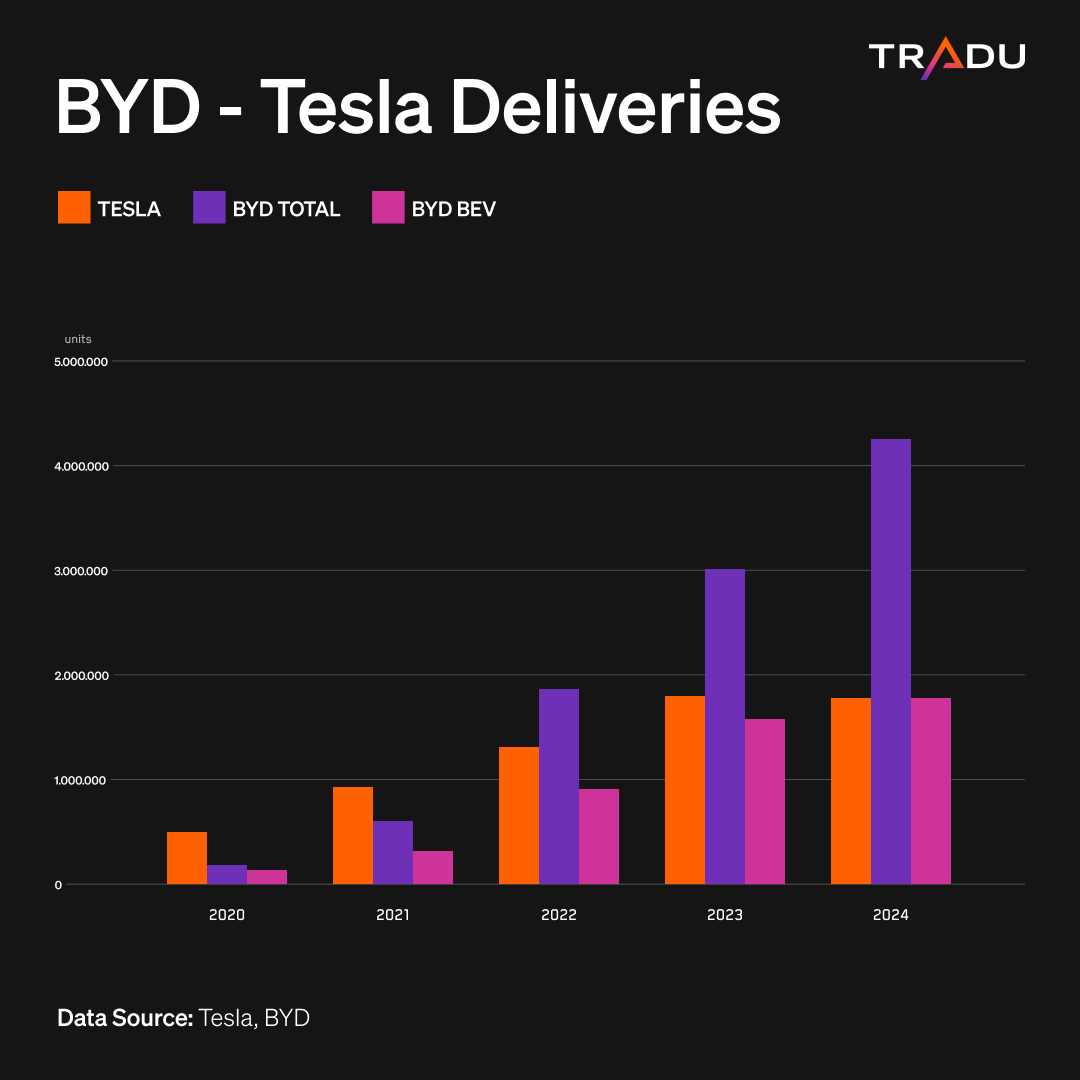
BYD is well positioned to overtake Tesla in 2025, thanks to its broader vehicle lineup and significantly lower entry price, starting [10] below $10,000 (RMB 69,800) in China. Furthermore, domestic demand remains strong, in contrast to the slowdown seen in Europe and the US, while BYD continues expanding its presence beyond China. Crucially, the company is advancing its autonomous driving technology, aiming to popularize [11] smart driving by equipping most of its models with such capabilities. It is also tackling range anxiety with its latest platform, which enables 400 kilometres of driving on just a five-minute charge - far outpacing Tesla in charging speed.
However, fraught Sino-Western relations can diminish the appeal of Chinese brands and tariffs can impede BYD’s global aspirations. The European Union has applied [12] an additional 17% import duty on BYD as part of its anti-subsidy measures, while the 100% tariffs [13] in the US make an entry virtually impossible. Additionally, China’s domestic market is highly competitive and heavily reliant on promotions, which pressures profit margins.
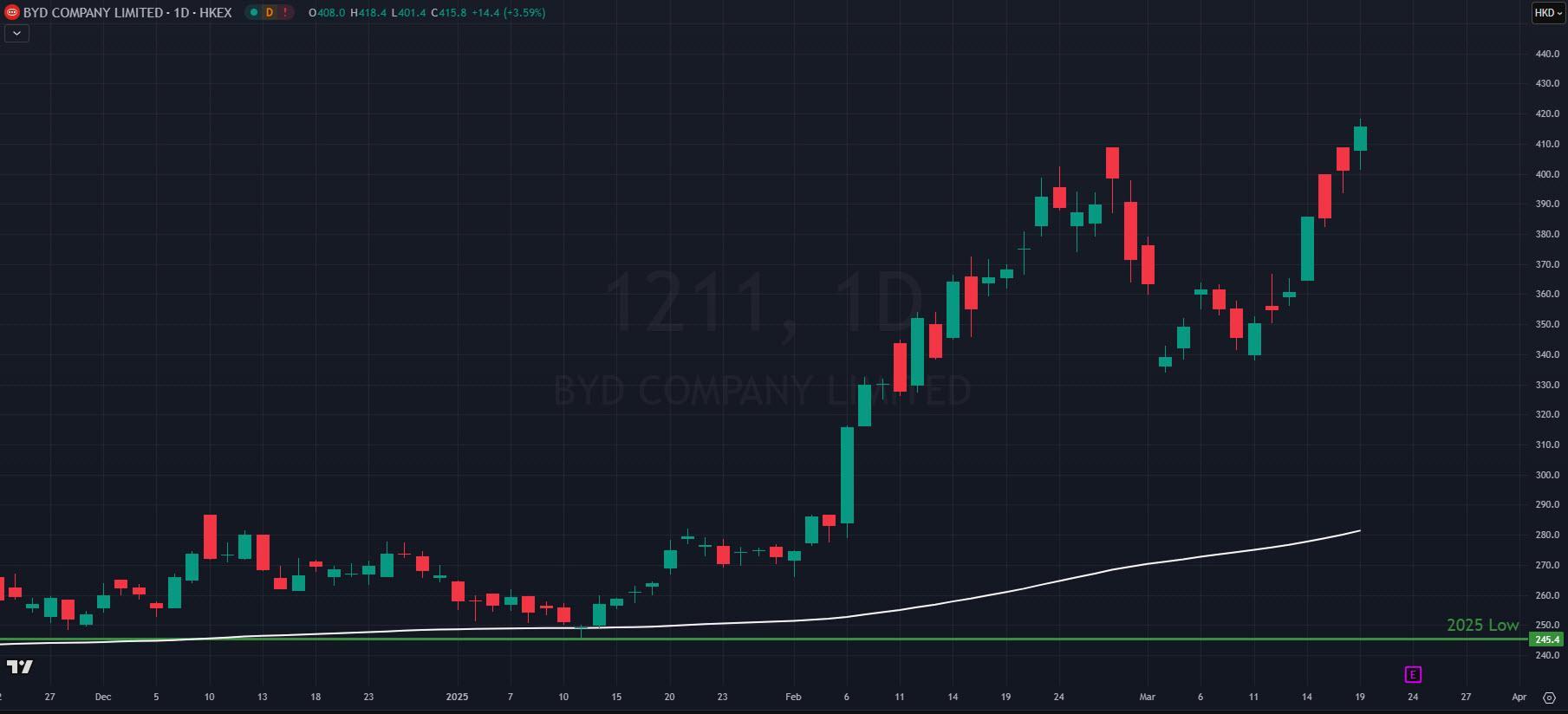
BYD’s expansion and technological leadership have fuelled an impressive stock rally in 2025, with new all-time highs setting the stage for further gains. However, geopolitical uncertainties, trade tensions, and China’s fragile economic recovery could pose headwinds for the stock (1211).
Source: www.tradingview.com
Volkswagen: Betting on affordability for EV success
The Volkswagen Group faced a difficult 2024, struggling with a weak economy, intensifying competition, and a broader slowdown in EV demand. The backtrack to hybrids - whose sales grew by 5% - was not enough to prevent an overall decline in total sales, which fell [14] due to a 3.4% drop in pure BEV sales, with Audi’s underperformance being particularly notable. Financially, the situation was no better, as revenues remained flat while profits and margins declined.
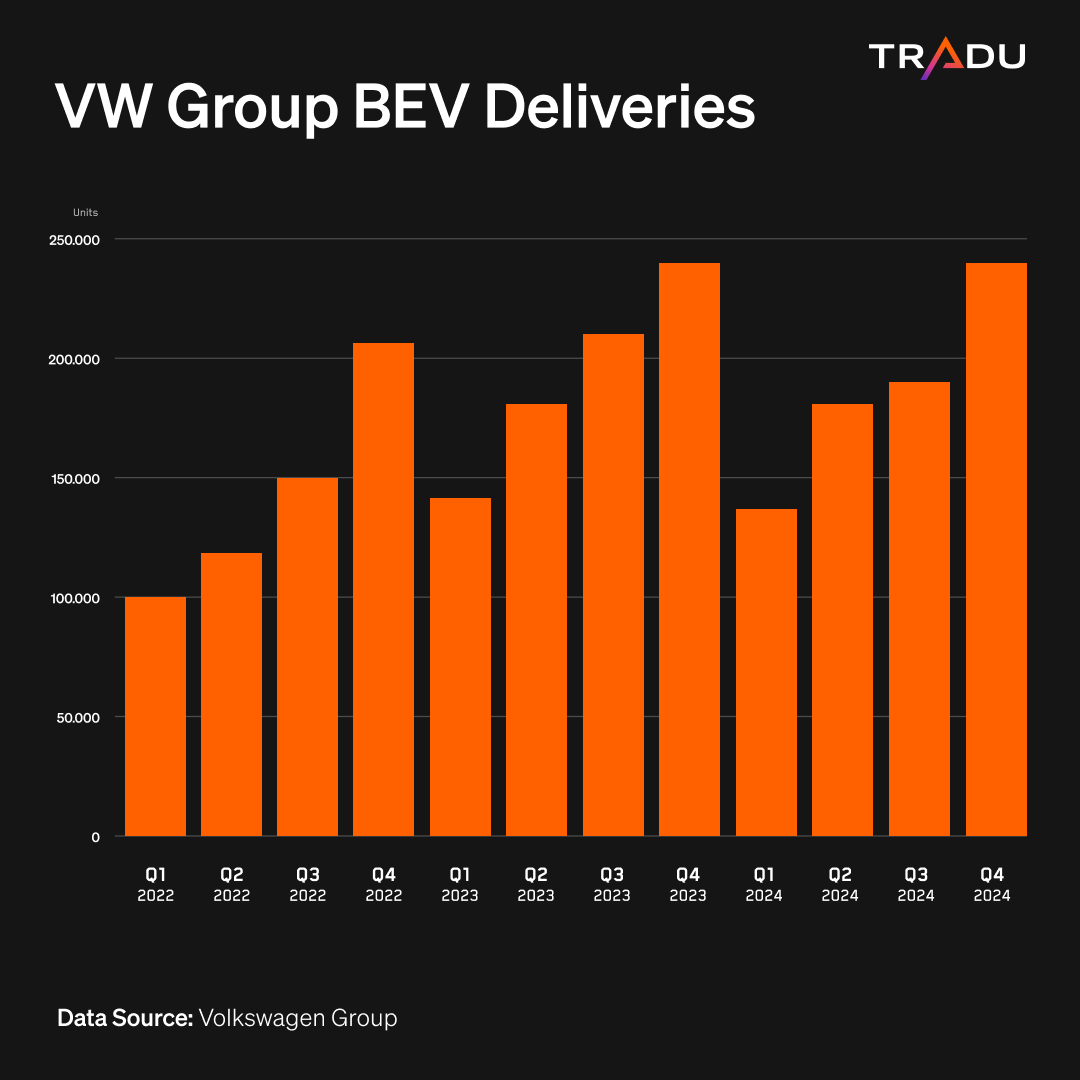
The German auto giant is now looking to turn things around with a series of strategic initiatives. Cost-cutting and efficiency measures are expected to lift operating margins to 5.5–6.5% this year while boosting revenues. Software remains VW’s Achilles' heel in the era of smart mobility, but its partnership [15] with Rivian could provide a much-needed solution. To further revitalise demand, Volkswagen is also focusing on affordable electric models, with prices starting as low as €20,000 [16] - a crucial step in driving mass EV adoption.
However, these budget-friendly models are not expected to hit the market this year, giving European rivals a head start while Chinese brands retain a competitive advantage. Additionally, Volkswagen’s early progress on these initiatives could be derailed by US President Trump’s disruptive trade policies.
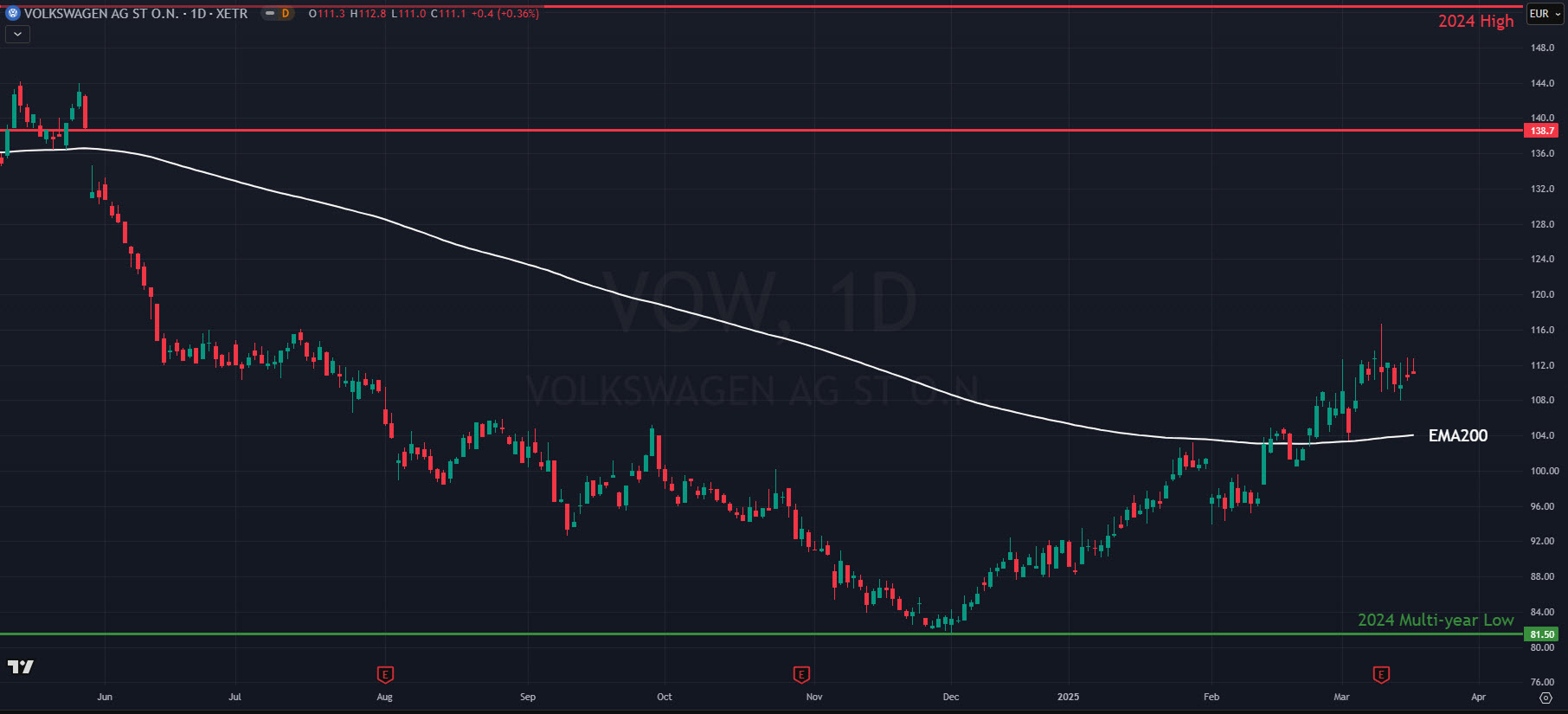
After three consecutive years of losses, a push for efficiency and cheaper EVs along with newly-found optimism around the German economy, fuel a stock recovery. Although bias is on the upside above the EMA200, VOW remains in risk of renewed declines against a challenging environment.
Source: www.tradingview.com
Rivian: Making the right moves, but hurdles loom
Unprofitable startups like Rivian are more vulnerable to the adverse macroeconomic environment and slowing demand. With less room for promotional offers to stimulate demand and the ongoing need for funding to scale production, Rivian has faced its share of challenges. These difficulties are likely to persist in 2025, as the company struggles to increase output, while President Trump’s trade and energy policies threaten demand. Reflecting the tough landscape, the EV startup forecasts a delivery drop [17] of between 1% and 10% this year.
Nonetheless, its CEO appears to be making all the right moves. The path to profitability hinges on reducing costs, ramping up production, and driving higher sales. Rivian plans to achieve this by expanding its vehicle lineup with more affordable models and extending its footprint outside the United States—though none of these initiatives are expected to materialise this year. Crucially, the company has secured a partnership worth up to $5.8 billion with Volkswagen, which can help it weather the storm while cutting costs and improving efficiency.
These initiatives are starting to show results: adjusted EBITDA losses narrowed in 2024, and executives are forecasting further improvements in 2025. In addition, Rivian posted its first-ever gross profit in the fourth quarter, making nearly $12,000 per vehicle sold - a watershed turnaround from the $39,000 loss per vehicle in Q3. In the second quarter of the current year, the company expects to begin deliveries of its commercial vehicles to customers beyond Amazon, which could bolster revenue further.
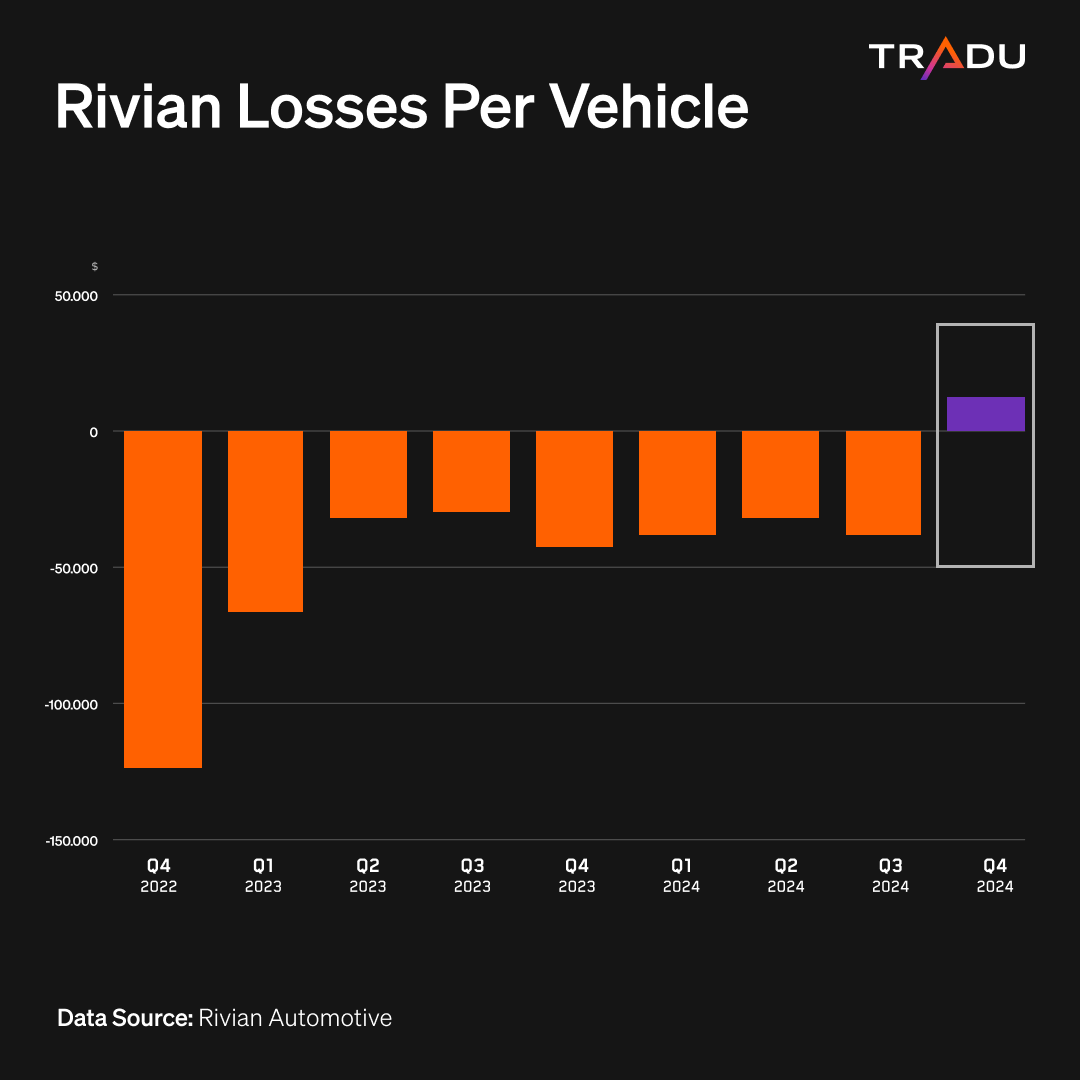
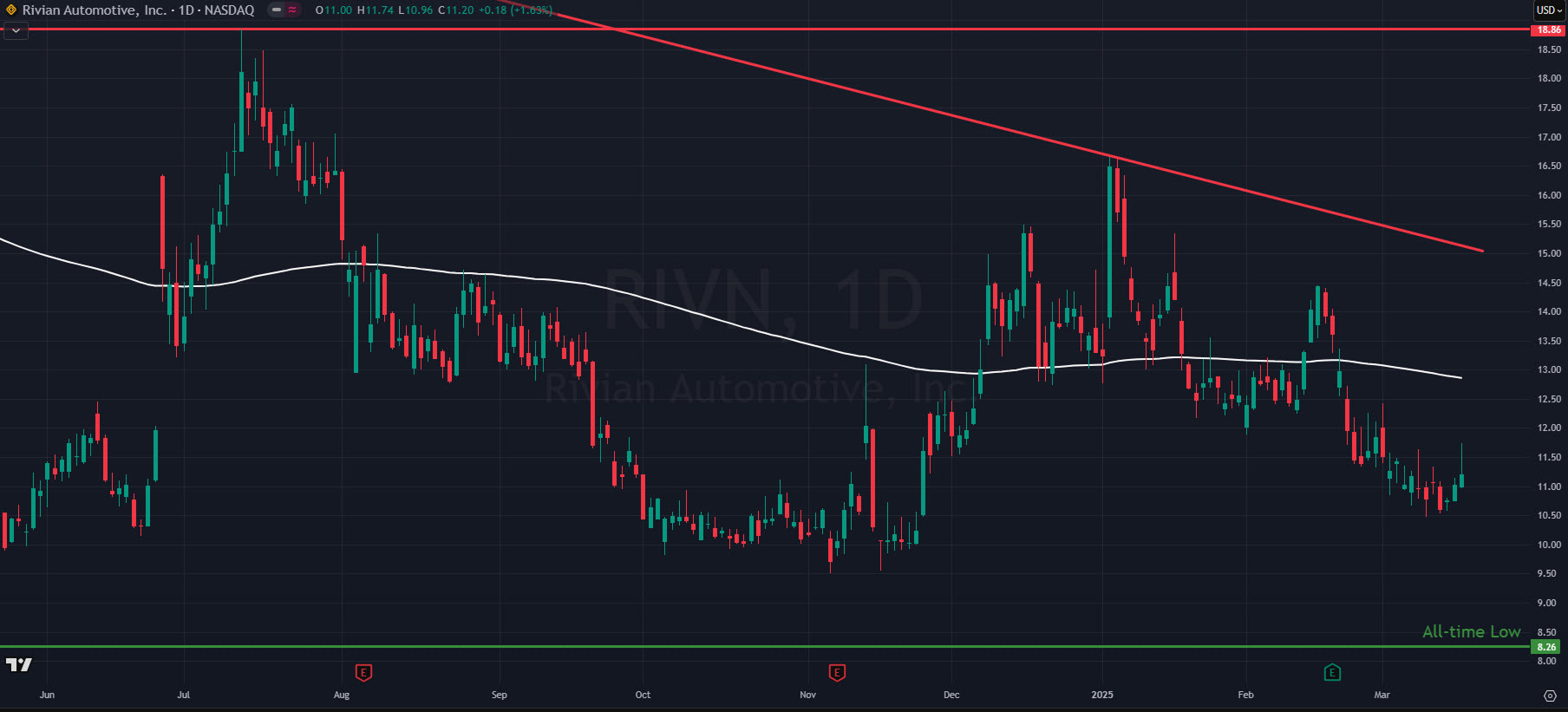
While these strategic moves are positive for Rivian, they have provided only limited support for its stock so far. RIVN is down in 2025 and risks reaching fresh all-time lows. The EV startup is not out of the woods yet and continues to face an adverse external environment.
Source: www.tradingview.com
Xiaomi: Making waves in the EV market
Xiaomi is best known as a smartphone giant, holding third place globally behind Apple and Samsung in 2024, but growing much faster than its rivals, according [18] to Counterpoint. The Chinese company also offers a wide range of smart devices, from wearables to home appliances like robot vacuums. This diverse product portfolio provides a vast installed base, with 702.3 million monthly active users as of December.
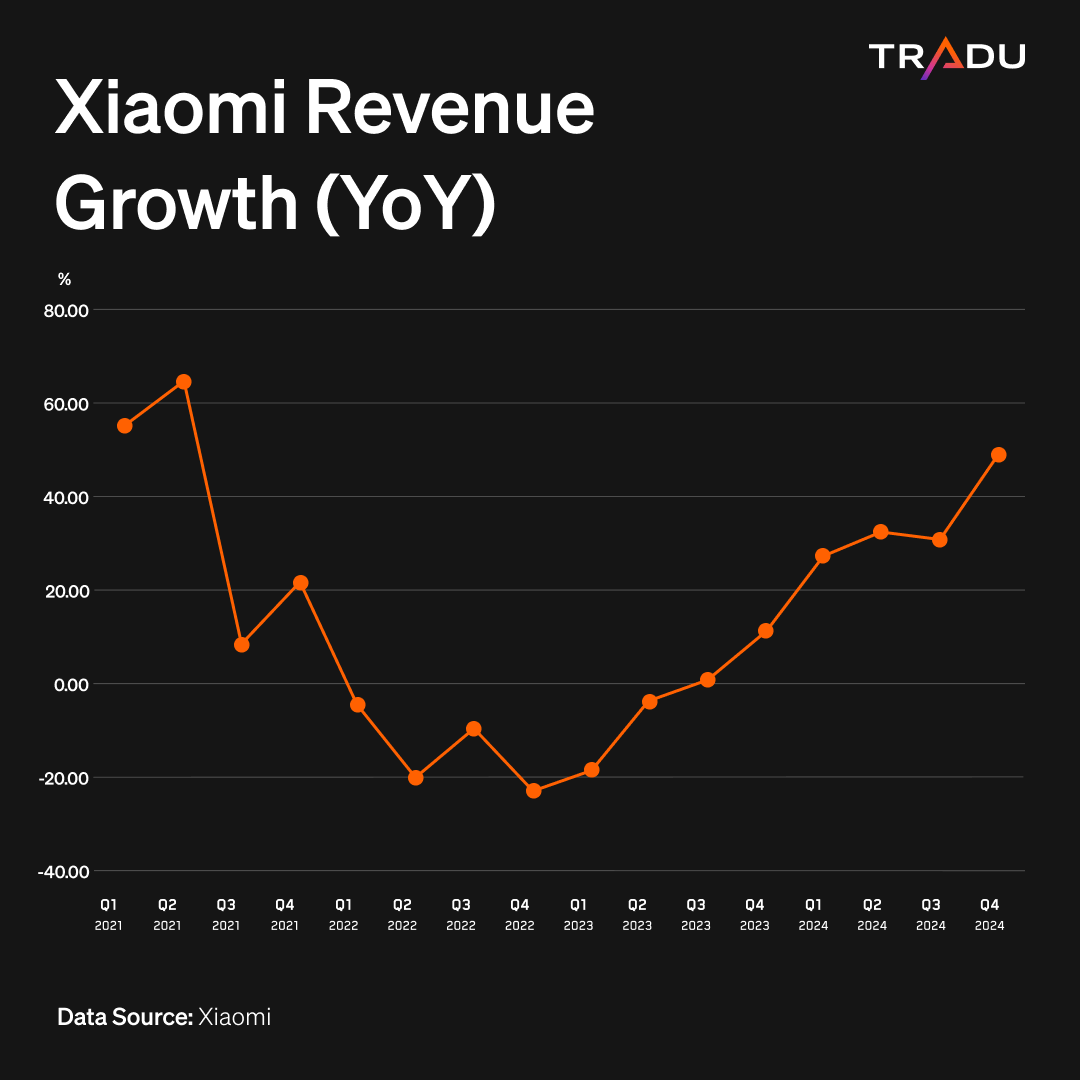
Xiaomi's success in smartphones and smart devices wasn’t enough. In search of new markets and further portfolio diversification, the company made a highly successful debut in the EV market in 2024 - a market Apple failed to crack. Xiaomi delivered [19] an impressive 136,854 vehicles in less than a year, driving the company back to revenue growth, with Q4 sales jumping 48.8% and the highest in nearly four years.
Xiaomi raised its target, now expecting to deliver 350,000 vehicles in 2025, and has confirmed the expansion of its lineup with the YU7 SUV set to launch mid-year. Executives envision a highly integrated "Human x Car x Home Smart Ecosystem," aiming [20] to make Xiaomi one of the top five automakers globally. While the company currently only sells its vehicles domestically, its President recently pointed [21] to international expansion “within the next few years.”
However, escalating trade tensions could hinder its global ambitions and negatively impact its financials, as more than 40% of its total revenues come from overseas markets. Additionally, Xiaomi faces intense competition in the domestic EV market, and long-term success is far from guaranteed. Scaling production quickly remains a significant challenge.
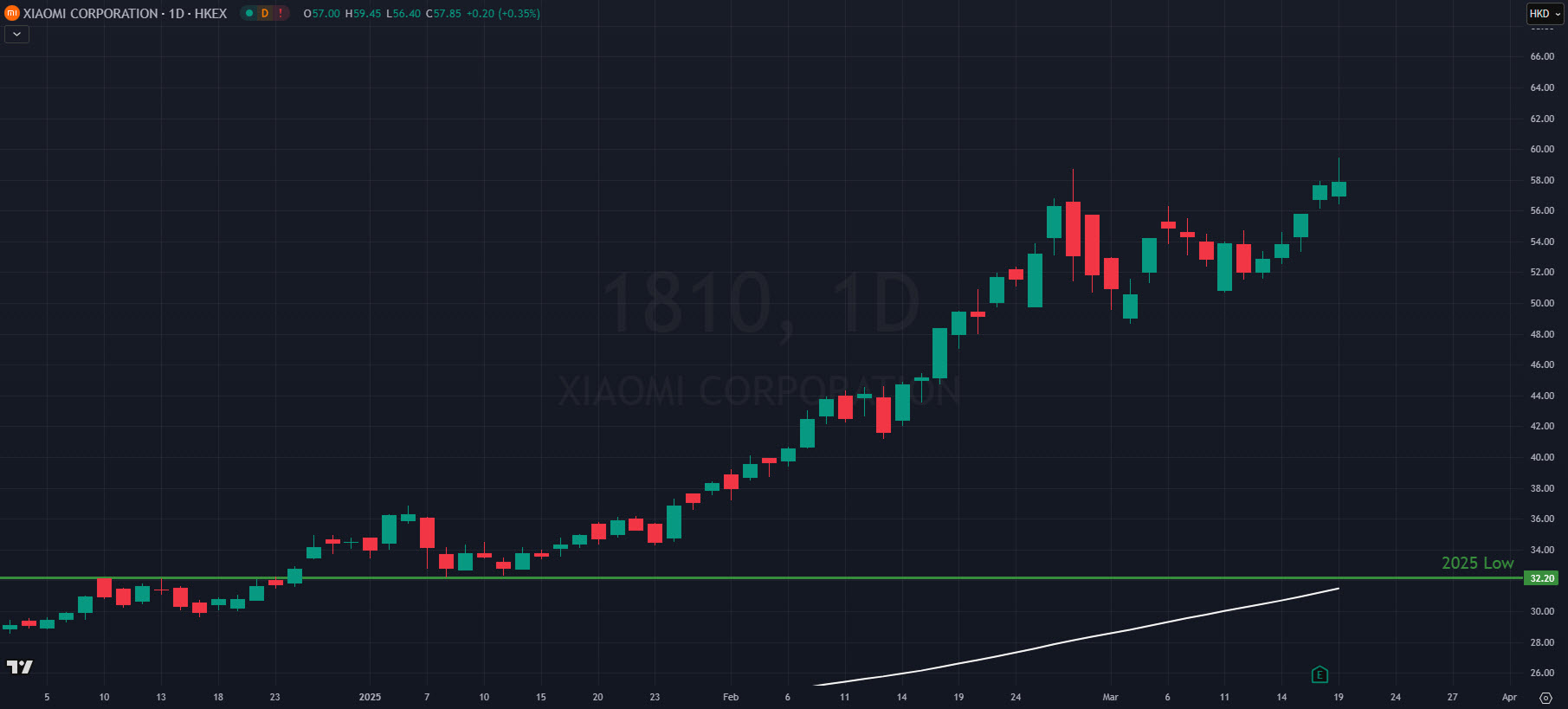
Xiaomi's stock (1810) has experienced a meteoric rise following the launch of its EVs, reaching multiple record highs this year. The company is well-positioned for further growth, but its high valuation amidst a challenging external environment could put pressure on its stock.
Source: www.tradingview.com
Opportunities and hurdles intersect in Q2
The EV industry has a chance to overcome last year’s struggles, and Q2 could prove pivotal in this process. Lower interest rates in Europe, the United States, and other key markets may facilitate purchases, while the launch of more affordable electric vehicles could accelerate mass adoption. Additionally, advancements in autonomous driving and breakthroughs in fast-charging technology may enhance the appeal of electric cars.
However, challenges remain. Economic uncertainty persists, compounded by disruptive trade policies that could weaken the global economy, drive up inflation, and strain both consumers and automakers. The EV sector also faces headwinds from President Trump’s commitment to fossil fuels and his push to roll back his predecessor’s clean energy policies.

Senior Financial Editorial Writer
Nikos Tzabouras
Nikos Tzabouras is a graduate of the Department of International & European Economic Studies at the Athens University of Economics and Business. With extensive experience in market analysis and a strong foundation in international relations, he brings a unique perspective to financial markets. Nikos emphasizes not only technical analysis but also on fundamentals and the growing influence of geopolitics on financial trends.
As a Senior Financial Editorial Writer, he delivers comprehensive and forward-looking insights across a wide range of asset classes, including equities, commodities, and currencies. His work explores how macroeconomic events, political developments, and global policies impact market dynamics, providing readers with a deeper understanding of both short-term movements and long-term trends.