

AI at inflection point after the DeepSeek breakthrough
After two years of rapid progress in Artificial Intelligence, it had begun to seem as though the pace might lose momentum. Alphabet CEO Sundar Pichai alluded [1] to this risk late-last year at the New York Times DealBook Summit, stating, “I think the progress is going to get harder. When I look at 2025, the low-hanging fruit is gone.”
However, Deepseek’s success in late January marked a paradigm shift in generative AI, as it was able to develop an open-source model that is competitive to those of OpenAI and other tech leaders, but at a fraction of the cost. The Chinese startup claims [2] to have trained its model on Nvidia’s less powerful H800 chips for under $6 million. At the same time, other Chinese tech giants, such as Alibaba and Baidu, are accelerating their AI efforts and open-sourcing their models.
These developments have raised concerns about US Big Tech’s leadership in AI, the vast sums invested in the technology, and the limited return on investment. Alongside a deterioration in Wall Street sentiment, fuelled by President Trump’s disruptive trade policies, US AI frontrunners - including Nvidia, Microsoft, and Alphabet - saw their stock prices decline in the first quarter of the year.
Against heightened competition, US tech giants can’t back down and commit to boosting their investments in order to defend their dominance, with Meta, Alphabet, and Amazon standing out. At the same time, US President Trump has pledged enhance America’s leadership, with initiatives like the $500 billion Stargate project [3].
Despite ongoing scepticism about AI’s actual productivity gains, growing concerns over its societal impact, and the threat of escalating trade tensions, the intensified efforts of Chinese firms and renewed commitments from US leaders set the stage for further advancements. The AI imperative appears inescapable, with billionaire investor Mark Cuban succinctly stating [4], “There are going to be two types of companies in this world: those who are great at AI, and everybody else that they put out of business.”
The technology is already evolving beyond chatbots towards Agentic AI, while autonomous driving and humanoid robots represent the next frontier. As the second quarter gets underway, companies such as Nvidia, Meta Platforms, Palantir, Salesforce, and Alibaba will be key players to watch in the ongoing AI race.
Nvidia: Well-positioned for further advances, but challenges loom
OpenAI’s launch of ChatGPT in late 2022 sparked a global AI arms race, with tech giants such as Microsoft and Alphabet vying for supremacy. This revolution has been underpinned by Nvidia, whose accelerated computing solutions have become the industry standard for training and inference in large language models. As the key enabler of this generational technological breakthrough, the chipmaker has seen a staggering surge in both its financial performance and stock price.
To meet insatiable demand, Nvidia has accelerated its product development cycle, with the newest Blackwell architecture already contributing [5] over a quarter of its record-breaking Q4 FY25 revenues. Although rivals such as AMD are making progress, they do not yet appear ready to challenge Nvidia’s dominance in the near term. Meanwhile, tech giants like Amazon, Alphabet, and Microsoft may be developing their own chips, but they still rely on Nvidia’s solutions.
However, concerns over demand have surfaced following DeepSeek’s cost-efficient model. A shift towards less expensive and less power-hungry large language models (LLMs) could erode Nvidia’s sales, while trade restrictions on China present another major headwind. Despite still impressive growth rates, Nvidia’s revenue expansion has slowed significantly over the past year, a trend expected to continue into the current quarter (Q1 FY26).

Nevertheless, tech giants continue to invest heavily in AI, and increased competition could accelerate advancements, proliferation, and inference - sustaining the need for Nvidia’s chips. CEO Jensen Huang reinforced this view in an interview with CNBC, stating [6] that next-generation reasoning models will require 100 times more computational power.
This year, AI scepticism, slowing revenue growth, and broader market uncertainty - exacerbated by disruptive trade policies - have sent NVDA into losses, reversing last year’s rally. While the current environment presents risks of further declines, the company and its stock remain well-positioned for long-term strength as AI continues to advance.
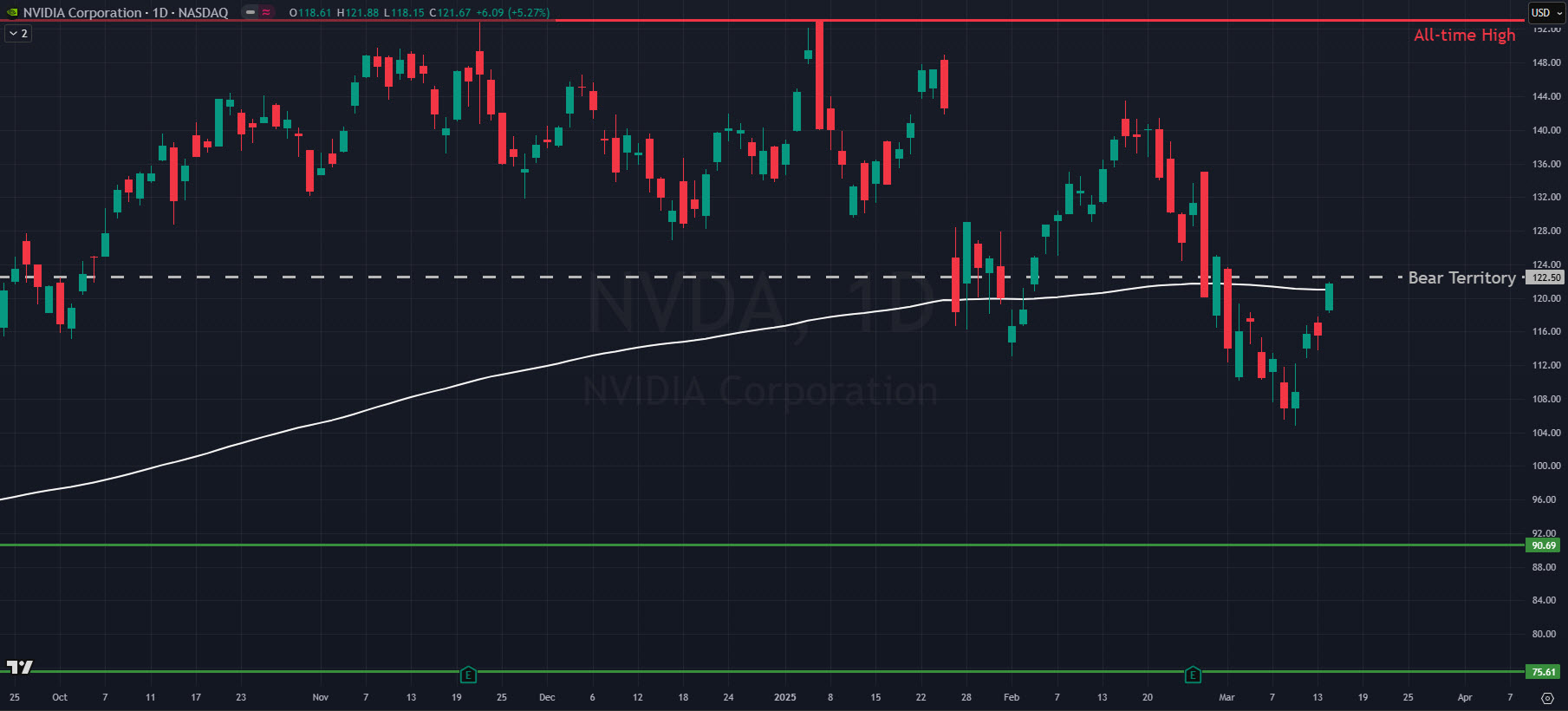
Source: www.tradingview.com
Meta Platforms: Seizing AI leadership
After a challenging period marked by its unsuccessful push into the Metaverse, Mark Zuckerberg swiftly redirected resources and focus towards generative Artificial Intelligence. Meta has since established itself as a leader in AI, with the strategic decision to open-source its large language model (LLM) validated by DeepSeek’s breakthrough. Crucially, Meta has demonstrated the positive business impact of its substantial AI investments far more effectively than rivals such as Alphabet and Microsoft.
Mark Zuckerberg has repeatedly highlighted how AI enhances user engagement on Instagram and Facebook, as well as boosting advertising sales - Meta’s primary revenue driver. During the latest earnings call [7], CFO Susan Li reported “strong” advertiser demand for Meta’s AI-powered suite, as both revenue and profits reached record highs. Unlike during the Metaverse era, robust growth rates mean investors are less concerned about heavy spending.
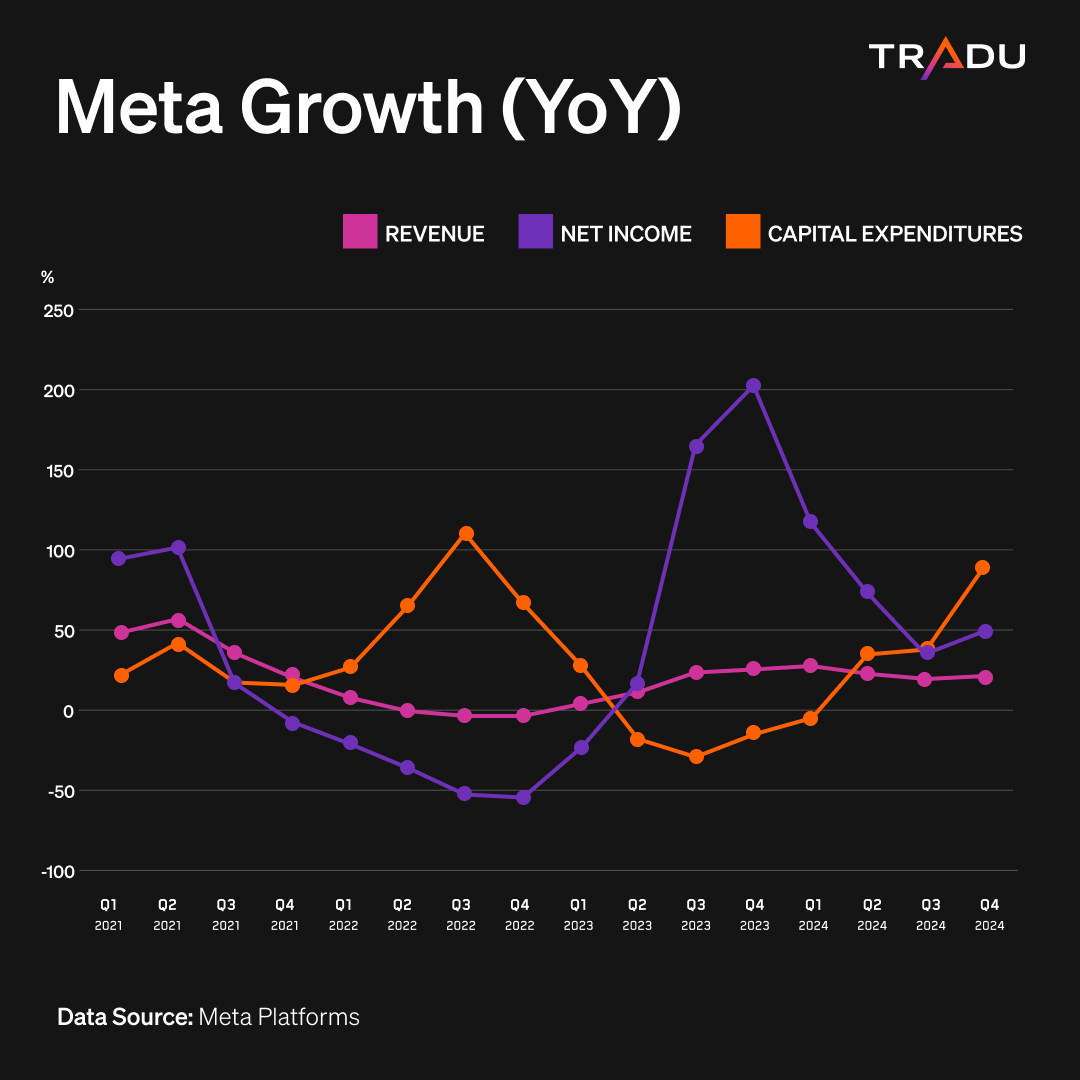
However, Meta’s capital expenditure (CapEx) is now outpacing its revenue and profit growth. Market tolerance for its AI-driven spending spree could be tested if this trend continues in the current and upcoming quarters. Additionally, its open-source strategy may limit its ability to monetise AI advancements effectively. Li remained vague on this point, simply stating that there are “clear monetisation opportunities here over time.”
Meta is also integrating AI into wearables, with its popular Ray-Ban Meta smart glasses featuring an AI voice assistant. But Zuckerberg’s ambitions extend even further - he envisions a future beyond smartphones, with smart glasses becoming the dominant user platform.
Meta’s AI-driven progress has not only helped its stock avoid the downturn affecting its Magnificent Seven peers but also enabled it to achieve a record-breaking 20-day profitable streak. META is on solid footing for continued leadership, yet challenges remain. It now finds itself at a crossroads, having erased most of this year’s gains, while further declines below the 200-day exponential moving average (EMA200) could shift bias to the downside.
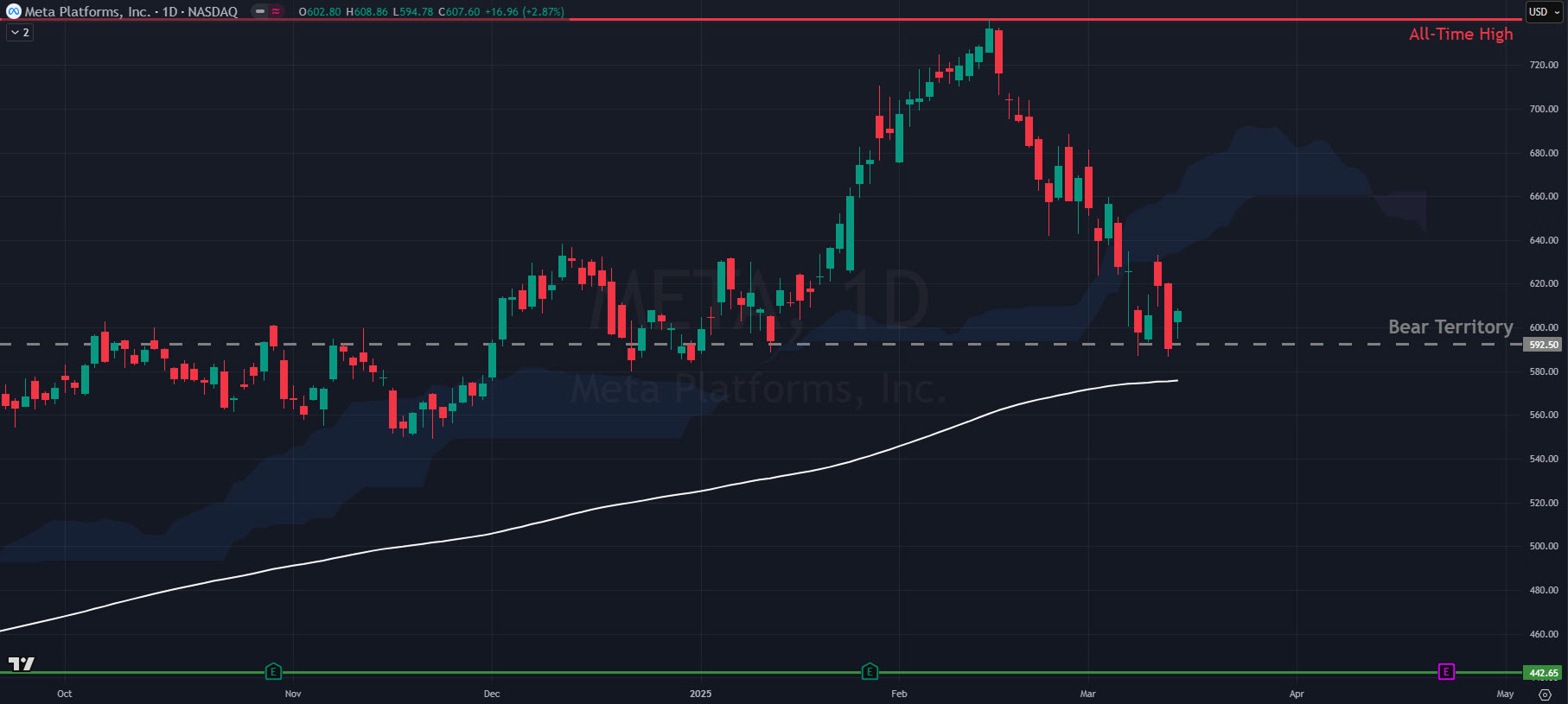
Source: www.tradingview.com
Palantir: AI runaway success amid pitfalls
Palantir is a data-analytics startup that has quickly emerged as a prominent entity in enterprise AI. It provides services to corporations and government agencies, covering [8] approximately 90 industries around the world, spanning across military, energy, health, autos and more.
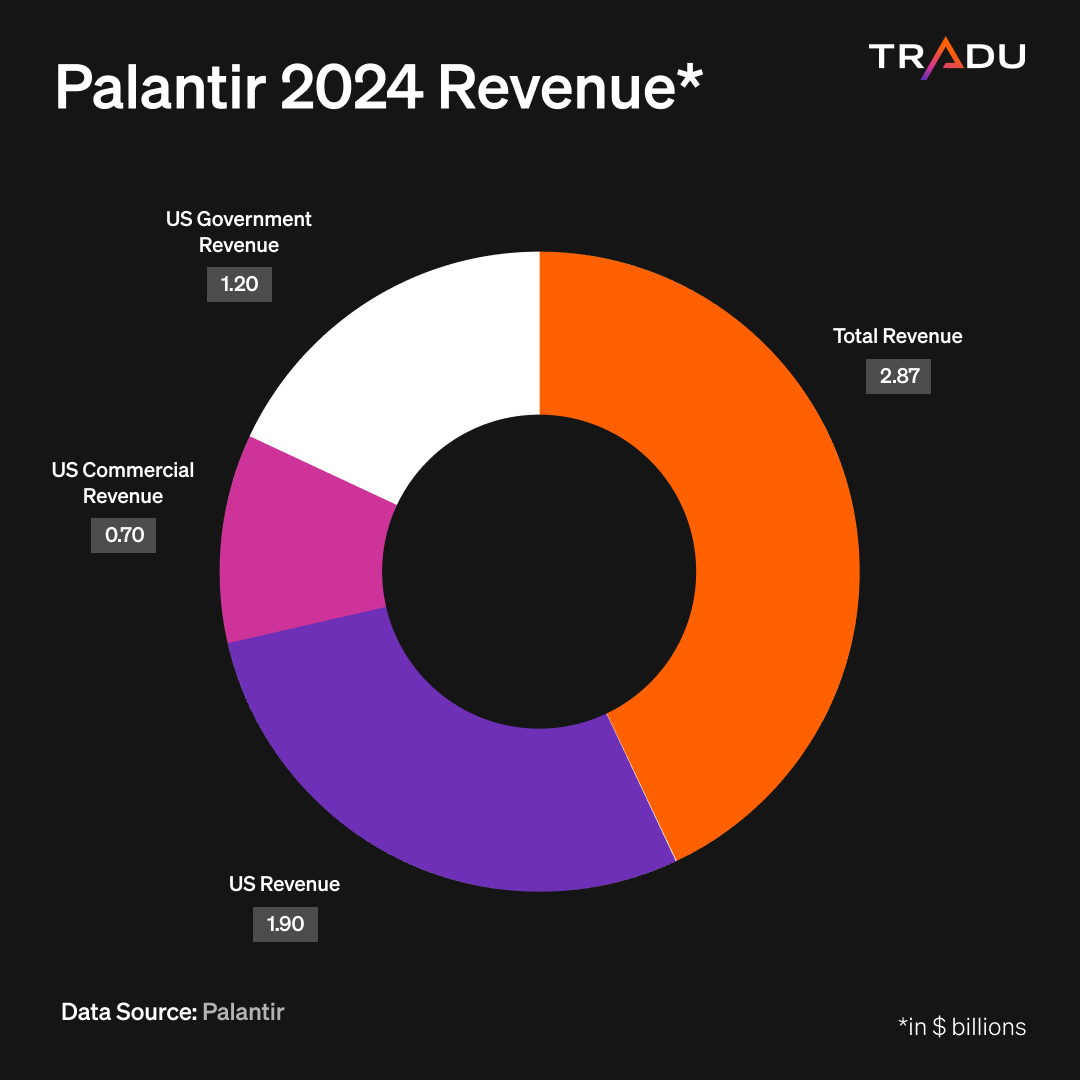
China’s accelerated progress in AI is expected to drive greater adoption by companies around the world seeking to enhance their technological capabilities and efficiency. At the same time, it can render AI more critical than ever for government agencies, particularly in sensitive areas such as defence. Palantir stands to gain from this AI imperative. In 2024, net income more than doubled to nearly $463 million, while operating margins expanded to 11%. Sales rose 29% year-on-year to $2.87 billion, with management forecasting [9] even faster growth of at least 30% this year.
Despite its impressive expansion, Palantir’s reliance on US government contracts could become a vulnerability in the Trump 2.0 era. The push for less spending under Elon Musk’s Department of Government Efficiency (DOGE) could pose a significant threat. Defense Secretary Hegseth sustained concerns with his pledge [10] to tackle excess spending in the Pentagon - a crucial business for Palantir. However, in a recent Fox News interview, President Trump stated [11] that while he supports cutting defence spending, the time is “not now”, given a multitude of threats.
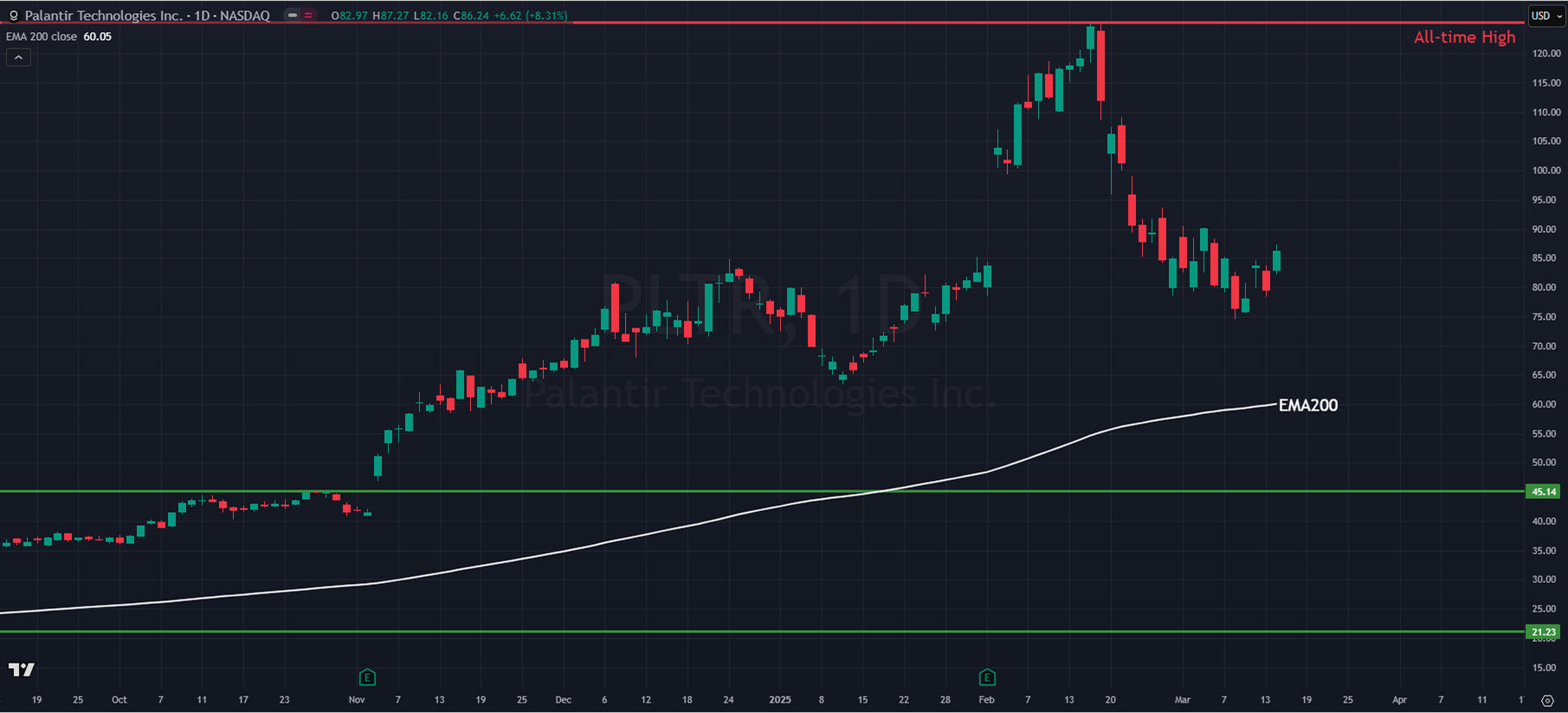
Palantir’s AI-driven success sent its stock soaring 340% last year, making PLTR the best-performing stock in the S&P 500, even surpassing Nvidia. This year, it has continued to climb to new all-time highs, avoiding the broader correction in US equities. However, its retreat from that peak has exposed the stock to the 200-day exponential moving average (EMA200), which could challenge its bullish momentum.
Source: www.tradingview.com
Salesforce: At the forefront of Agentic AI
Salesforce is a software company, providing customer relationship management technology (CRM) that has quickly become as a key player in enterprise AI. The launch [12] of Agentforce places it at the forefront of Agentic AI, competing with Microsoft and Google.
Salesforce’s solution can revolutionise the CRM landscape, enabling customers to build and deploy AI-powered agents capable of executing tasks independently. Since its rollout in October, the company has secured [13] over 5,000 deals, with its CEO stating that they are “already delivering unprecedented levels of productivity, efficiency, and cost savings for thousands of companies.”
However, this leading work will need time to filter through to its financials, as evidenced by the latest results. While revenue reached a record high of nearly $10 billion in Q4 FY25, the pace of expansion continues to slow. Management expects this trend to persist, raising concerns over monetisation. Sales projections stand at 6%-7% for the current quarter (Q1 FY25) and 7%-8% for the full year - both marking a further deceleration in growth.

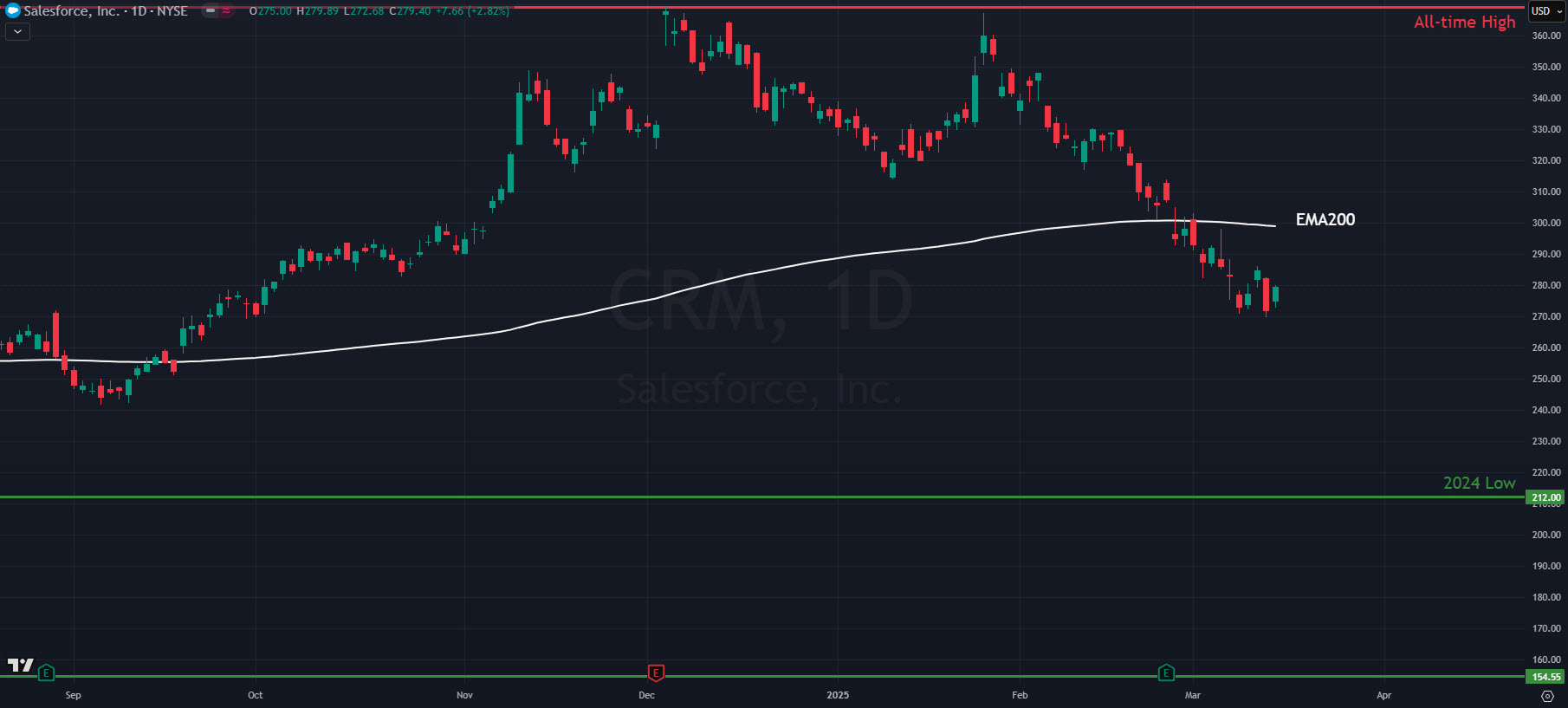
Following a strong performance in 2024, Salesforce’s stock has failed to set new all-time highs and avoid to the broader tech pullback in Q1. Having fallen below the 200-day exponential moving average (EMA200), CRM remains vulnerable to further losses. However, its leadership in AI could help it regain momentum.
Source: www.tradingview.com
Alibaba: Accelerating AI efforts
After a few difficult years amid regulatory crackdown and slow start in the AI arms race, Alibaba accelerates its efforts as DeepSeek’s success leads the way and Beijing embraces Artificial Intelligence. The company has pledged [14] to spend RMB380 billion ($USD 52.5 bln) on AI and cloud over the next three years - a figure that exceeds its total spending in the past decade.
In quick succession, Alibaba launched its newest 2.5-VL-72B flagship model [15] and the QwQ-32B reasoning model [16]. Both have performed competitively in various benchmarks against other cutting-edge large language models (LLMs) like those from DeepSeek and OpenAI. Crucially, in contrast to many US rivals, these models are open-source, and the company has also freed its video generation suite [17].
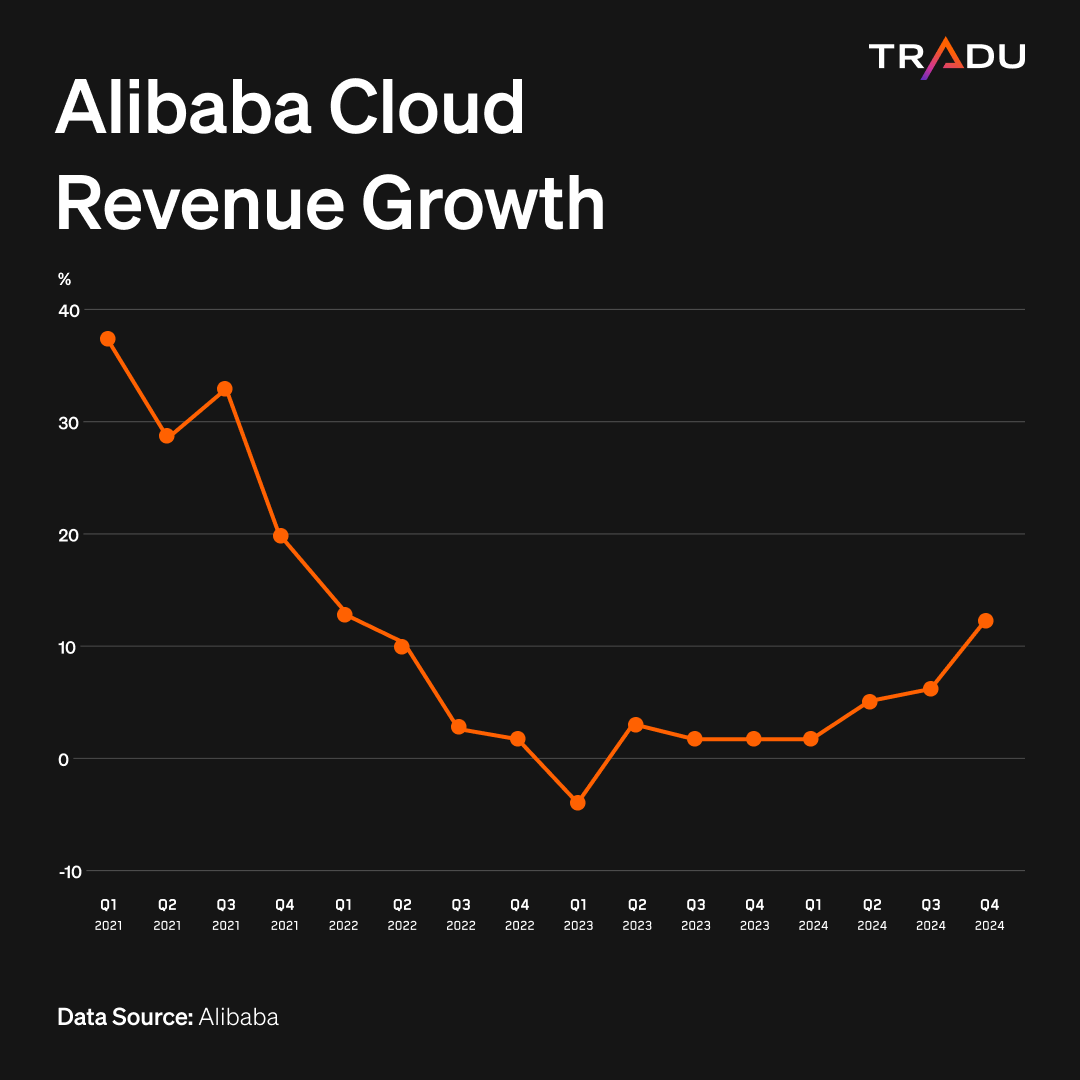
Alibaba’s fourth-quarter earnings [18] show that its advances are paying off, with CEO Wu emphasising progress in the “user-first, AI-driven” strategy. Revenue from its cloud business accelerated, benefiting from the “growing adoption” of AI-related products. Overall sales rose 8% year-on-year, with its largest commerce segment benefitting from government stimulus measures and trade-in programmes designed to boost household spending.
Despite this recent success, Chinese companies may be at a disadvantage compared to US rivals due to the tighter regulatory environment and US export controls on advanced chips. Broader trade disruptions also threaten the economy, as well as efforts to boost weak domestic consumption, which could in turn impact Alibaba’s e-commerce business.
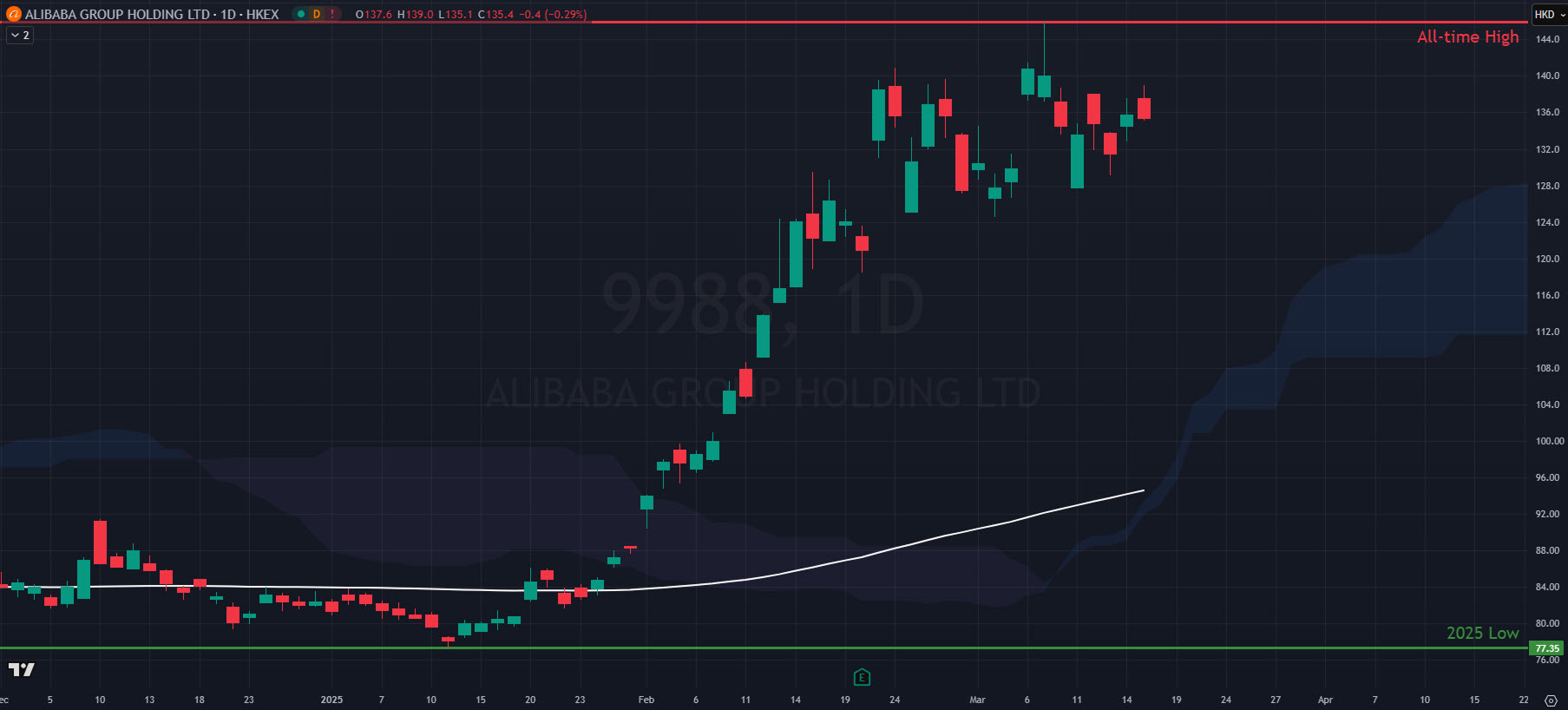
Shares of Alibaba in Hong Kong have soared this year, setting new record highs. Thanks to its accelerated progress in artificial intelligence and the broader appeal of Chinese growth stocks, BABA is well-positioned for further gains. However, economic headwinds and increased competition in AI may lead to pullbacks.
Source: www.tradingview.com
AI stocks face a pivotal Q2
The first quarter of the year has reshaped our perception of artificial intelligence companies. The previous narrative of undisputed US dominance, stunning stock rallies, but also concerns over the pace of innovation is no longer the prevailing story. The focus has now shifted to the advancements made by Chinese tech giants and their surge in stock prices, while US equities retreat.
Nonetheless, US Big Tech companies remain committed to significant spending to maintain their leadership. The drive for greater efficiency, combined with heightened competition, sets the stage for accelerated innovation and the wider proliferation of AI. As such, the second quarter of the year could prove pivotal for the sector.

Senior Financial Editorial Writer
Nikos Tzabouras
Nikos Tzabouras is a graduate of the Department of International & European Economic Studies at the Athens University of Economics and Business. With extensive experience in market analysis and a strong foundation in international relations, he brings a unique perspective to financial markets. Nikos emphasizes not only technical analysis but also on fundamentals and the growing influence of geopolitics on financial trends.
As a Senior Financial Editorial Writer, he delivers comprehensive and forward-looking insights across a wide range of asset classes, including equities, commodities, and currencies. His work explores how macroeconomic events, political developments, and global policies impact market dynamics, providing readers with a deeper understanding of both short-term movements and long-term trends.